Politics
Canada-U.S. trade deal must include viable auto sector, Carney says
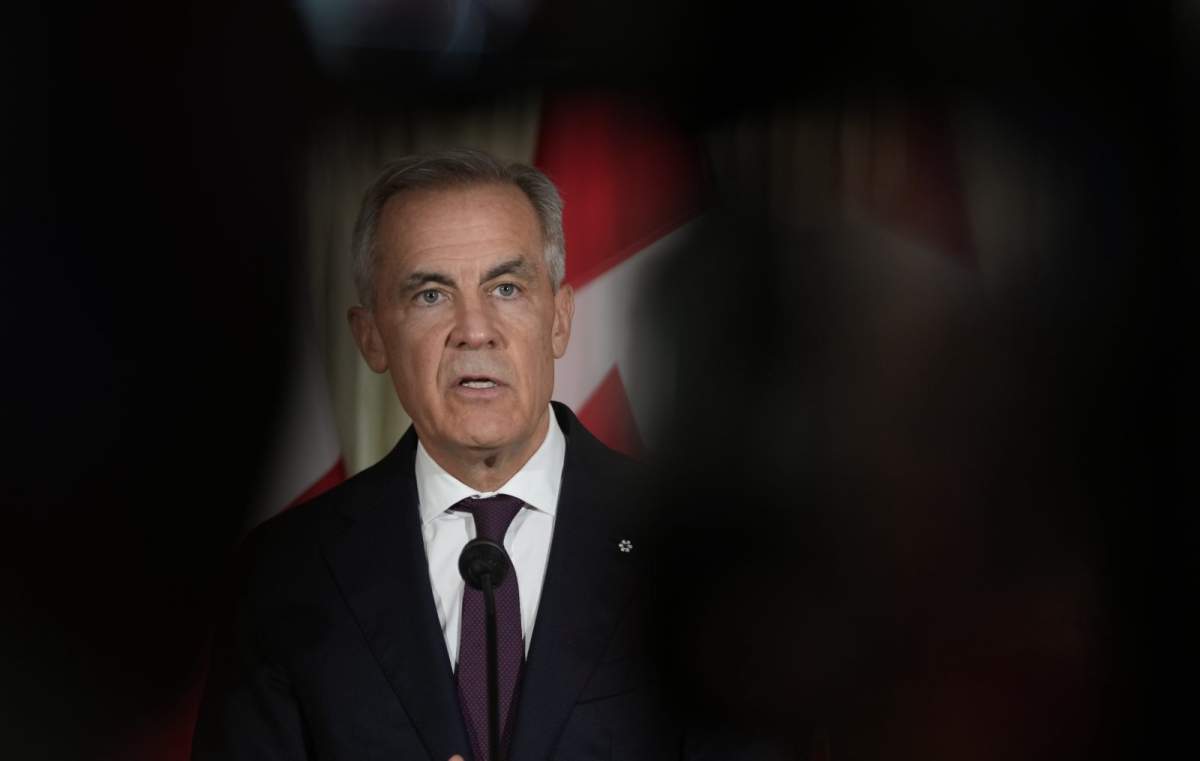
View image in full screen
Prime Minister Mark Carney speaks with media during a news conference in Manila, Philippines, Saturday, Nov. 14, 2026.
Adrian Wyld/The Canadian Press
Prime Minister Mark Carney says trade talks with the U.S. are making progress, but Ottawa won’t accept a deal that doesn’t allow for a viable auto sector.

“Lots of people think that we should just go and take whatever deal,” Carney said Saturday in Manila.
“This government will not settle for a deal with the United States that is not consistent with a viable Canadian auto sector.”
Carney was speaking at a news conference, three months after Canada pulled out of trade talks with the U.S., saying there had been last-minute demands from Washington that included a hit to Canada’s auto sector.
“This is one of the fundamental issues in our trade negotiation, and we are making progress toward that,” he said of the auto sector, adding it was also “one of the most challenging issues” in the talks.
Carney revealed he had “quite a long, substantive conversation” this week with U.S. President Donald Trump, in which both U.S. Trade Representative Jamieson Greer and Trump’s chief of staff Stephen Miller were on the line.

Get daily National news
Carney said the American automotive market relies in part on Canadian manufacturing, and the continental industry is challenged by speed of production and by electrification.
“The sooner that we can get to a stable trading relationship under the new trade policy of the United States for the auto sector, it’s absolutely in the interest of course of Canadian workers, Canadian auto sector, but very much the U.S. as well,” he said.
- Lawyers unsure if extra funding can reduce massive caseload at Federal Court
- CFB Wainwright incident casts spotlight on reserve pay disparities: former bureaucrat
- Former environment minister says Canada’s commitment to climate targets ‘factually untrue’
- Canada, Philippines conclude negotiations for free-trade agreement, aiming for 2027
Carney also said that Chinese investment in Canada’s auto sector is restricted to a set timeline and amount of vehicles, and will be reassessed based on multiple factors including the state of Canada’s integration into the U.S. automotive sector.
Carney also reiterated that Ottawa feels automaker Stellantis has not met obligations it took when accepting federal funds as it signed a deal to sell its Brampton, Ont., assembly plant to defence contractor Roshel.
“We’re not satisfied in any way with the current situation and the partial approach that Stellantis has taken here,” Carney said.
“The expectation is that Stellantis fully respects its engagements to the workers and to Canada.”
Stick to the Facts
Add Global News as a Preferred Source on Google to see more of our stories in your search results.
Journalistic standards
Comment
Report an error
Sponsored content