Politics
‘They buy because it’s easy’: Legal shops want more than enforcement to fight illegal pot


View image in full screen
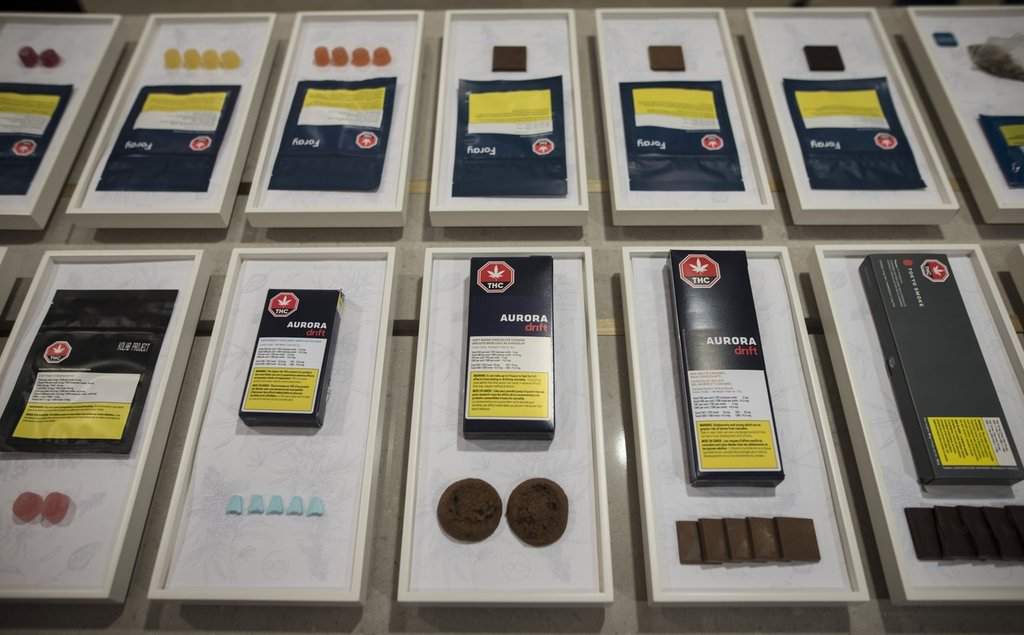
A variety of cannabis edibles are displayed at the Ontario Cannabis Store in Toronto on Friday, Jan. 3, 2020. Legal retailers say they want the Ford government to modernize pot sales to combat the illegal market. THE CANADIAN PRESS/ Tijana Martin.
GAC
Though the Ford government says it’s planning to introduce new measures to crack down on illicit cannabis sales, legal retailers are questioning why it took eight years following legalization for enforcement tools to be bolstered.

Several legal sellers told Global News they want Ontario to take the new rules a step further, by allowing the legal market to innovate and modernize cannabis sales by lifting some restrictions on how and where pot can be sold.
Increasing the appeal and ease of the legal product is what the industry truly needs to combat illegal enterprises, said Mike Dunn, the owner and founder of 1922 Cannabis in Toronto, a licensed cannabis dispensary.
“People don’t buy illegally because they want to break the law. They buy because it’s easy,” said Dunn.
On Monday, the Ministry of the Attorney General announced the Ford government will introduce new legislation to “strengthen enforcement” against illegal cannabis sales by providing “new tools” to the Alcohol and Gaming Commission of Ontario to tackle unauthorized sellers.
The legislative changes would include “the authority to conduct inspections, seize illegal cannabis products and equipment and issue administrative monetary penalties,” said the attorney general in a news release this week.
The illegal market for cannabis sales in Ontario has been prolific. When cannabis was legalized in October, 2018, the legal market was only responsible for 5.4 per cent of purchases, according to the Canadian Press. Legal sales only overtook illegal sales for the first time at the end of 2021.

Get breaking National news
Now, illegal cannabis retailers make up about 30 per cent of cannabis sales in Ontario, according to the ministry.
Omar Khan, with High Tide, the parent company of retail chain Canna Cabana, said the new legislation will allow the Alcohol and Gaming Commission to seize products and issue fines without the burden of proof needed for criminal prosecutions.
Anytime a new illegal seller emerges near any store, legal enterprises are threatened, he said. There are about 1,800 legal retailers across the province, according to the Ministry of the Attorney General.
“We’re encouraged by this move,” he said. “Every indication that I’ve heard says that the government is taking this seriously.”
But the province has faced criticism for its approach to shutting down illegal pot shops over the last few years.
In early 2025, Carleton Grant, Toronto’s executive director of municipal licensing and standards, said the city hadn’t been given adequate municipal funding to enforce rules against illegal stores.
- Canada receives first F-35 jets from U.S. as full order still under review
- Brazil voters head to polls in presidential runoff
- Who is Lorne Doerkson, B.C.’s next premier?
- Legal expert calls out Trump’s threat to delegitimize Alaska senate vote
Ford should have shored up enforcement on illegal retailers soon after cannabis was legalized, according to some legal sellers. Now, they say, the government has an opportunity to make legal sales more appealings and further discourage illegal sales.
Some illegal vendors offer late night delivery options, with cannabis products just a text away on a customer’s phone. Cannabis can be delivered legally in Ontario but hours are restricted from 9 a.m. to 11 p.m. Dunn’s retailer, 1922 Cannabis, does offer delivery using bike couriers to try to tap into the ease customers are looking for.
“Enforcement can close doors. It can’t make the legal option easier,” said Dunn.
Khan said the new tools will only work if the Alcohol and Gaming Commission is provided with enough resources. He also agrees with Dunn that Ontario’s retail framework for cannabis needs modernization.
“Whetheter that’s looking at the potential for consumption spaces, consumption lounges for cannabis drinks or cannabis edibles,” he said. Ontario could follow Alberta, which allows temporary cannabis store licences for adults-only music festivals, he said.
“A lot of provinces are letting cannabis stores sell munchies and snacks and a few other things to increase revenue lines. We hope and encourage the Ontario government to take a look,” he said.
Ontario NDP Leader Marit Stiles said she wants to see what the Ford government firmly proposes before determining if the legislation will be effective.
“They talk a lot before they come back to the legislature, but we need to see the details of what they’re proposing,” she said.
The planned new legislation has not been released yet. The legislature is not sitting, as it was put on a 21-week long summer break that began in June. MPPs are scheduled to return on Oct. 27.
Stick to the Facts
Add Global News as a Preferred Source on Google to see more of our stories in your search results.
Journalistic standards
Comment
Report an error
Sponsored content